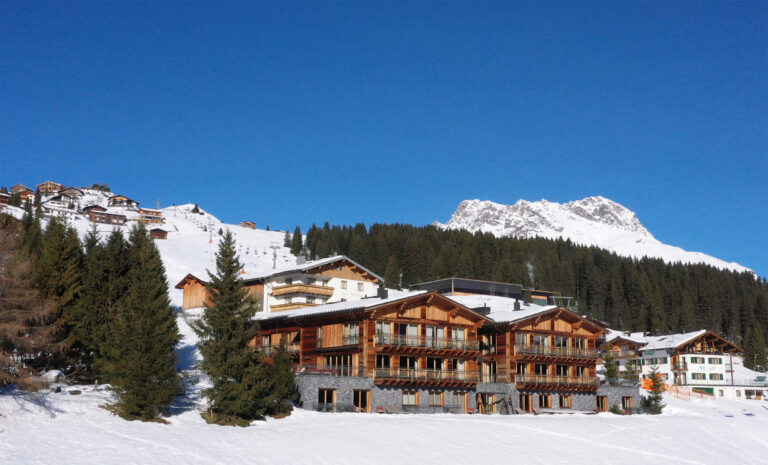

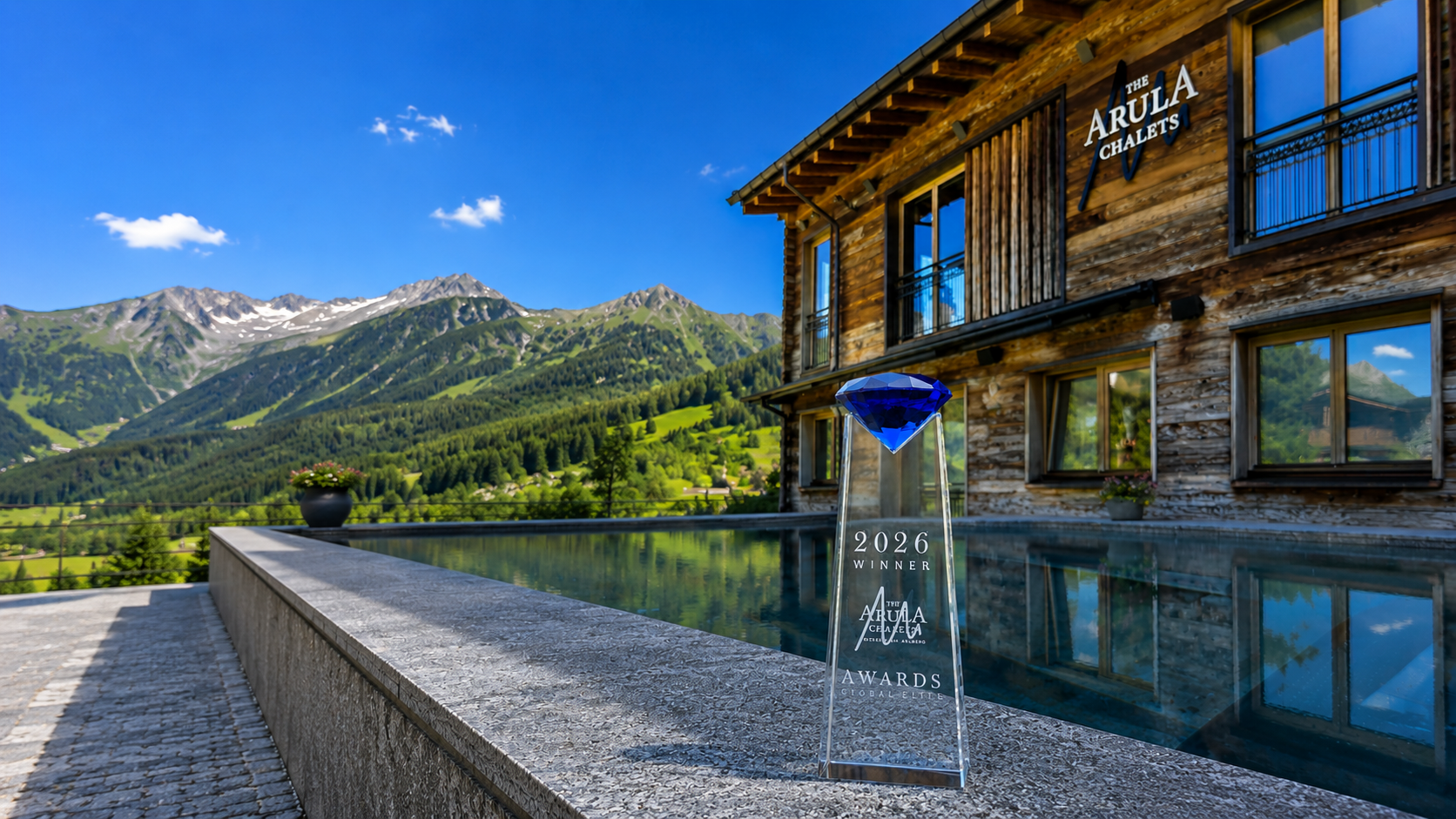
The Arula Chalets, recognised earlier this cycle as the Leading Exclusive Luxury Ski Chalets for Fully-Catered Experiences by the Global Elite Awards 2026, has completed a substantial refurbishment across its two chalets in Oberlech am Arlberg. What began as a plan to modernise a gym and update the wet spa evolved, over successive design meetings, into something considerably more ambitious: the first full longevity programme in the resort, and, by the operator’s account, one of the first Alpine Longevity Retreat offerings of its kind in Austria.
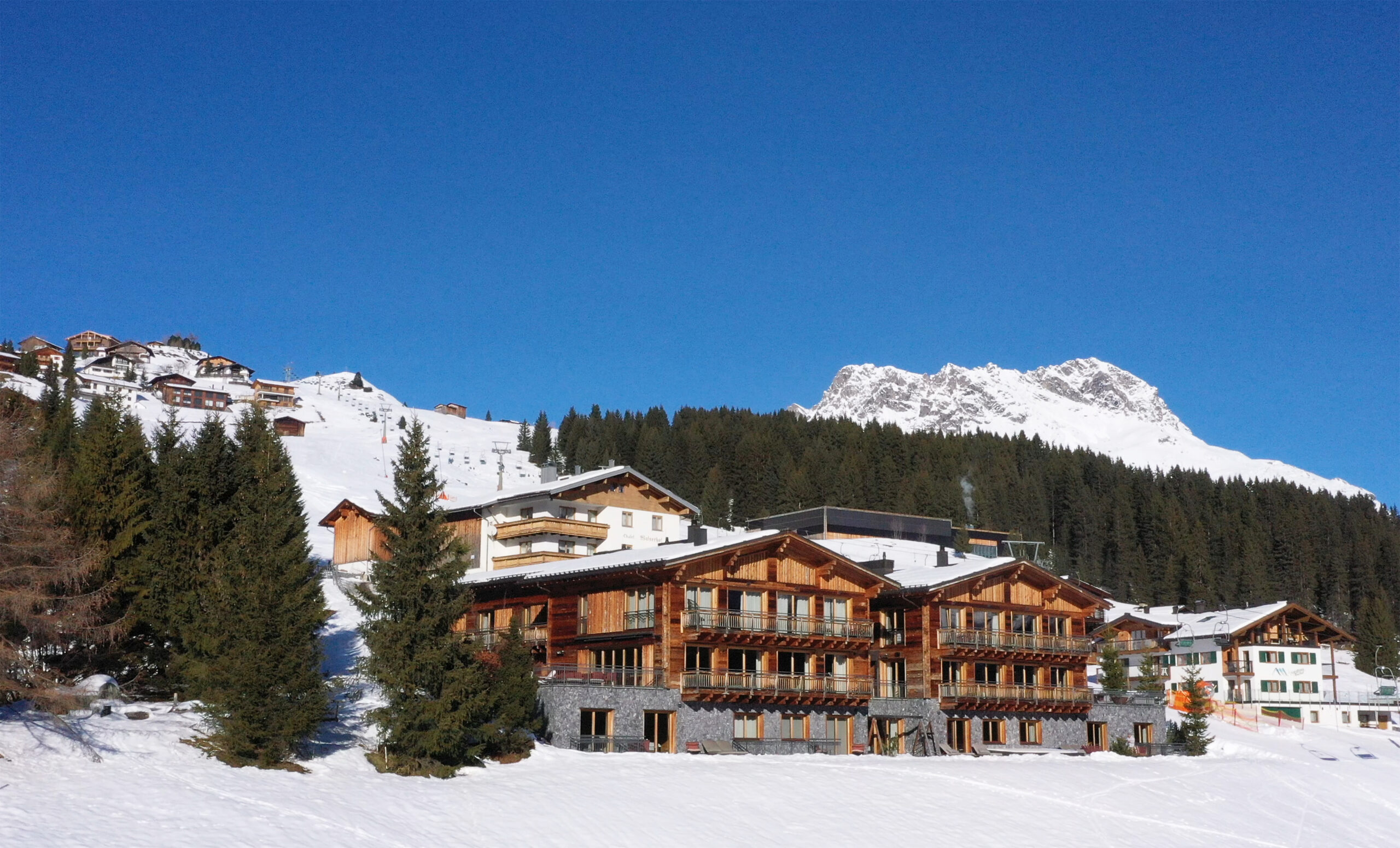
A New Chapter for a Global Elite Awards Winner
Under the direction of Joscha Meier, managing director of masseto immobilien GmbH, the property already occupies a defended position in the Alpine luxury category. The Global Elite Awards jury recognised the house in 2025 and again in the 2026 cycle for a hospitality model built on privacy, chef-led catering, and a home-away-from-home service standard that is difficult to replicate at scale. What the 2025 refurbishment has now added is a second axis to that positioning. The Arula Chalets are no longer only a place to arrive, ski, and be looked after. They are also a place to arrive and leave measurably better.
That shift is deliberate. Over the in-between season from September to the end of November 2025, the property was largely closed to guests while the team took a substantial part of the building apart. Walls, ceilings, and even the floors were removed. The screed and the floor heating in the lower level of Chalet 1 and Chalet 2 were taken out and rebuilt. Floors were decoupled to isolate treatment areas acoustically. A former outdoor area attached to Chalet 2 was brought inside under a new glass ceiling. And a wall was cut through to open a new corridor linking Chalet 1 directly into a fresh yoga studio. It is unusual for a property of this size and reputation to undertake structural work at this level. It is more unusual still to do so in service of a wellness thesis rather than an aesthetic one.
From a Modest Brief to an Alpine Longevity Retreat
The original scope was, by the team’s own account, modest: convert the gym into a sound healing room, add a yoga studio, refresh the wet spa. During the design phase the brief was rewritten. Rather than a set of upgraded facilities, the house committed to a coherent longevity programme, in which each new treatment addressed a specific dimension of the guest’s recovery and daily function, and in which the sequence between them was designed to be used together over a stay of several nights.
The most transformed area is the wet spa in Chalet 1. The steam bath was retained. The bio-sauna was replaced with a Finnish sauna. Almost everything else is new. The atmosphere is intentionally darker and quieter than the earlier interior, calibrated to the way discerning wellness travellers now expect a longevity space to feel. The rest of the treatment offer sits inside this new envelope.
Halotherapy in the Salt Room
The salt room was reimagined rather than replaced. The salt wall was preserved, and the space was fitted with heated loungers and converted into a dedicated halotherapy room. Guests recline in warmth while the air is diffused with fine salt, echoing the experience of breathing at the coast. The effect over a session is quiet but consistent. The upper airways open, the sinuses clear, and the anti-inflammatory action of the salt crystals softens irritation across the respiratory tract and the skin. Complexion tends to steady over successive sessions. It is a treatment designed to be added into a longer daily rhythm rather than experienced as a single event.
The Hyperbaric Capsule
The hyperbaric capsule is the most technical of the new installations. Sessions run from twenty minutes to two hours, with the chamber pressurised to 1.5 bar and 100 per cent oxygen delivered through a mask. Under pressure, the blood plasma is able to absorb considerably more oxygen than at atmosphere, which has a measurable effect on inflammation in the muscles and on the rate at which the body clears metabolic byproducts. The treatment sits well alongside the halotherapy in a longer recovery protocol, and the team has found it particularly useful for guests recovering from long covid, for high-altitude endurance athletes, and for anyone arriving in Lech from a hard travel schedule and asking for a faster return to clarity. It is not a treatment traditionally associated with a ski chalet. That is part of the point.
Hot and Cold
The oldest longevity axis of all is the alternation of hot and cold. The Arula Chalets now offer both dimensions. A cold plunge delivers the slower, deeper cold that trained users prefer, and a cryo-chamber delivers the shorter, sharper surface shock. Three to five minutes is enough. The physiological cascade is well understood by now: the body reads the cold as a serious event and releases adrenaline, dopamine, serotonin, and endorphin in sequence. Guests emerge into the sauna or the heated loungers with the alertness and calm that this specific chemistry produces. Over a stay, the effect on sleep, mood, and morning energy is what regular users describe as the point of coming.
The Flotation Bed
The flotation bed is a quieter installation and, in the team’s view, one of the most underestimated. The guest lies on the bed as it fills, and the body is progressively lifted until it is floating weightless on a thin cushion of water. Three intensities of jet then work along the spine, and a light therapy programme runs above. The combined effect on the back and the paraspinal muscles is significant, especially after a day of skiing, and the treatment is often booked either side of a massage rather than in place of one.
A Dedicated Sound Healing Room
The former gym in Chalet 1 has been rebuilt as a sound healing room. Bowls, gongs, and low-frequency vibration are used together in longer sessions calibrated to the state the guest arrives in. The room reads more like a Japanese-influenced meditation space than a spa treatment room, and the response from returning guests over the first months of operation has been the most consistently emotional of any of the new installations. It is the part of the offer that most clearly signals that the house has moved from spa to longevity.
The Wider Refurbishment
The yoga studio, the redesigned treatment rooms, and the two pool areas complete the programme. The yoga studio is fitted with fold-away Reformer beds, allowing it to run as a Pilates space between yoga sessions. One of the treatment rooms is equipped with a Manuthera bed for osteopathic work. The pools have been re-clad in warmer materials and the acoustic treatment across the level has been rebuilt around a soundproofing system that keeps each room properly isolated from the next. The old gym in Chalet 1 was moved into the former waiting area for a better use of the volume, and the Chalet 2 gym has been re-equipped with new machines. Nothing about the guest circulation is arbitrary. Every part of the sequence, from arrival through halotherapy, hyperbaric, hot and cold, flotation, and sound, has been laid out so that the treatments can be used in the order that produces the best outcome for the guest.
Home Away From Home, Extended
What The Arula Chalets have effectively done is add a longevity dimension to a hospitality model that already had one of the most defended positions in the Alpine category. The house is no longer only an exclusive ski address. It is also a place where a guest can arrive off a long season, follow a properly designed longevity protocol for four or five nights, and leave measurably lighter. The Global Elite Awards jury will look at the 2026 recognition, at the 2025 recognition that preceded it, and at this refurbishment together, and read them as one continuous story. What began as a family-scale ski chalet in Oberlech has, over successive years, become one of the more considered Alpine Longevity Retreat propositions in Europe, and it has done so without loosening its grip on the privacy and warmth that first defined it.
For more information visit thearulachalets.com and globaleliteawards.com.